

What the 2026 NGER Amendments Mean for 2026-2027 Reporting
The 2026 NGER amendments introduce a range of changes to emissions estimation methods, emission factors and reporting requirements. They will apply from the 2026-27 reporting year onwards, affecting reports due by 1 November 2027.

What the Draft NSW Air Modelling Methods Could Mean for Your Upcoming Project
The draft NSW EPA Air Modelling Methods could significantly change how projects are planned and approved, with implications for timelines, costs and approval risk. Projects that invest early in clear, well‑justified modelling and engagement with regulators are likely to be better placed under the proposed approach.
NGER Scheme 2026 Updates: Why This Consultation Matters for Your Business
Australia is proposing significant updates to the NGER Scheme from 1 July 2026 that could materially affect how businesses measure and report emissions, particularly under the Safeguard Mechanism. With consultation open until 8 May 2026, this process offers a critical opportunity for organisations to understand the impacts and influence the final rules before they take effect.

Odour in the Regulatory Spotlight: What EPA Victoria Enforcement Means for Operators
EPA Victoria has intensified its response to offensive odour impacts, using stronger enforcement powers under the Environment Protection Act 2017 to hold operators accountable beyond licence compliance. Recent court orders and inspection blitzes signal that effective odour management and evidence-based risk control are now regulatory essentials.

NSW Environmental Legislation Amendment Act 2025
The Environmental Legislation Amendment Act 2025 introduces extended noise abatement timeframes, expanded enforcement powers and new sentencing considerations under the POEO Act, reshaping how noise compliance is managed in NSW. These changes heighten the need for robust monitoring, defensible records and proactive noise management by regulated organisations.

Environmental Authority Conditions for Critical Minerals Projects in Queensland
DETSI has released new Environmental Authority conditions for critical minerals projects including a requirement to install meteorological stations in line with BoM siting guidelines. These differ in detail from the AS/NZS 3580.14 standard for air quality monitoring, highlighting the need for comparison and careful interpretation when planning meteorological monitoring for air quality assessments.

Animal Noise Monitoring
Animal noise, particularly dog barking, is a common source of community complaints and regulatory action. This article explores how AI-based noise classification improves the accuracy, efficiency and defensibility of animal noise monitoring and compliance assessments.

Transport For NSW – Road Noise Guidelines 2025
Transport for NSW released two updated documents in April 2025: the Road Noise Criteria Guideline and the Road Noise Mitigation Guideline. The criteria guideline supersedes Practice Notes I and III of the 2001 Environmental Noise Management Manual, and the Mitigation Guideline supersedes RMS 14.584 and Practice Notes (iv), (iv-a) and (iv-c).

Tips for a Seamless Air Quality Assessment
Early engagement with an air quality consultant can save time and costs by helping identify potential issues before they affect project design or schedules. The success of an assessment depends not only on technical expertise but also on careful planning and coordination.
PFAS reporting for chemical manufacturers and importers in Australia
The Australian Industrial Chemicals Introduction Scheme (AICIS) has announced an evaluation under Section 74 of the Industrial Chemicals Act 2019 covering 522 per- and polyfluoroalkyl substances (PFAS) listed on the Australian Inventory of Industrial Chemicals (AIIC).
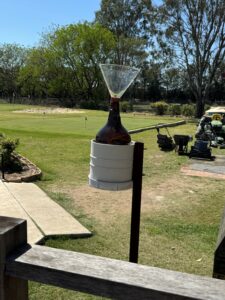
Dust Management: Tools and Techniques for Monitoring
Dust may seem insignificant, but its impact on health, amenity and the environment is real. Modern tools like dust sampling bottles and directional devices like the DustScan help engineers, regulators and the public understand and control generation of dust particles more effectively.

Proposed Amendments to Queensland’s EP Act: Key Changes & Industry Impacts
The Department of the Environment, Tourism, Science and Innovation (DETSI) is proposing amendments to the Environmental Protection Act 1994 including the introduction of mandatory codes of practice for low-risk activities, clarified definitions and administrative requirements.